
Open world video games are some of the most common triple-A games seen these days. So many iconic game franchises have experimented with the free explorative nature of the open world. From Mario and Zelda, to Grand Theft Auto and Sonic the Hedgehog. The formula is simple; A vast area to explore with no loading zones blocking you from any of it. Towers and viewpoints that unlock more of your map. You can go anywhere at any time and do any of the game’s quests in any order.
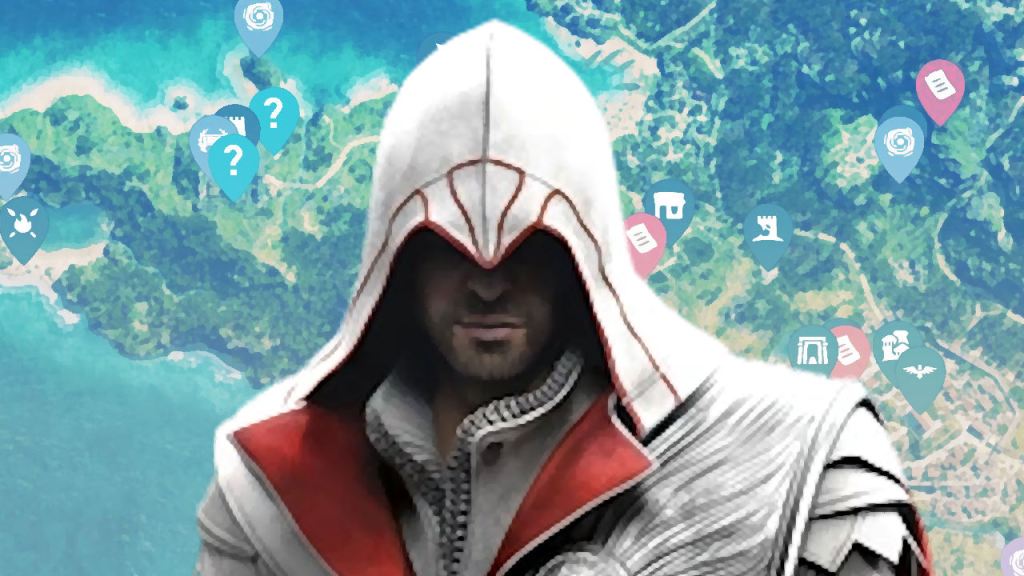
The open world formula as we know it today was popularized in 2007 with the release of Ubisoft’s unexpected hit, Assassin’s Creed. The game that started out as a spin-off to the Prince of Persia series was so popular that every AAA studio since had tried their hand at a similar formula. A huge map to explore, packed full of icons you can tap on and track down and fill hours of your day with little satisfying adventures in between the main story missions that will send you to all corners of the map, encouraging you to explore and unlock everything as you progress. The satisfaction of filling out your map is addicting, and it feels so good to track down all of your little icons and clear them all off one by one.
Of course, the satisfaction of the 2007 iterations weren’t enough. Games always get bigger as studios progress. Games need to keep being larger and larger to take more of a player’s time. If a player has more to do in your game, they’ll play your game more instead of a competitor’s. By the time Assassin’s Creed 2 came out, Ubisoft was already coming up with more ways to engage a player’s time. More icons on the map, more quest types, and why not allow players to purchase businesses and property in the game world? In Assassin’s Creed Brotherhood we could allow the player to build factions and invest in Rome’s economy. Add in a system for training your Assassin’s Guild all over the world with timed quests. And so on, and so on.
Back then these additions just seemed like more bang for your buck when you purchase a big game. $60 would grab you a 60 hour experience if you wanted to complete it all, and that was just more value. It was a no-brainer to add all of this extra filler into your game because it filled out the massive world that you wanted to dunk your player base into.
The problems began to sprout once Ubisoft decided to start releasing games for their new flagship franchise on an annual basis. Multiple studios working on sequels all at the same time to ensure that the games could keep getting bigger every single year, still be packed with new icons on the map and new mission types, while also shipping on time. It became a struggle of quantity over quality.
Reusing assets and missions across multiple games, just to fill more of your players time. Hundreds of icons on the map till you can’t even see the lay of the land. Hundreds of NPCs just standing there with a little glow around them, letting you know they wanna talk to you, just to engage a minute or two of your time.
Go beat up this guy, go pickpocket this guy, go open this treasure chest… Rarely anything of substance, and yet so much of it, and nearly unavoidable.
Somehow Ubisoft was oversaturating the market of open world games seemingly single-handed. When you didn’t have an Assassin’s Creed, there was a Far Cry or a Watchdogs. Every product from Ubisoft quickly became just that… A product. You weren’t playing a game, you were purchasing a Ubisoft product; an interactive experience designed front-to-back for you to spend as much of your time with it as possible, whether any of that time was of substance didn’t matter.
What started as a genuine and true innovation very quickly became an oversaturated genre that people couldn’t escape from. If you wanted to play a triple-A video game, you had to be willing to fall into a 60-100 hour long experience, and that’s just the way it was. It wasn’t enough anymore to give your player a satisfying 10 hour long story. You had to keep their brain engaged for so long, and never let them run out of things to do.
Quests became randomly generated versions of the exact same thing over and over. Survival and crafting mechanics are in nearly every open world experience. Anything to take another minute of your time. Anything to keep you tapping ‘A’ on NPCs, to keep you scrolling through menus, to keep you collecting in-game currency.
What started as a way to build the in-game world into a living, breathing place turned it more dead than game worlds had ever been before.
Some open world games in recent years have learned how to pull back and give the player just enough to be satisfied while not seeming overwhelming, such as Elden Ring and The Legend of Zelda: Breath of the Wild, while plenty of others fall into the same patterns of too much for the sake of too much, like Starfield and Zelda: Tears of the Kingdom.
Open world gaming is here to stay. The industry has made that very apparent. Even Ubisoft has been whittling down their experiences, aiming for the simpler core experiences they used to release like with Assassin’s Creed Mirage. Will more studios follow suit? There’s only one way to really find out. With recent releases like Star Wars Outlaws and Dragon Age Veilguard, I don’t think so, but at the same time, Sonic X Shadow Generations and Elden Ring give me hope.
I love the concept of an open world, but I would love to see more games truly using this formula as a way to build out a world, instead of just fill it out.
What’s your favorite open world game and why?

 Cyber Soup
Leave a comment